



Are Super Clone Watches Good?
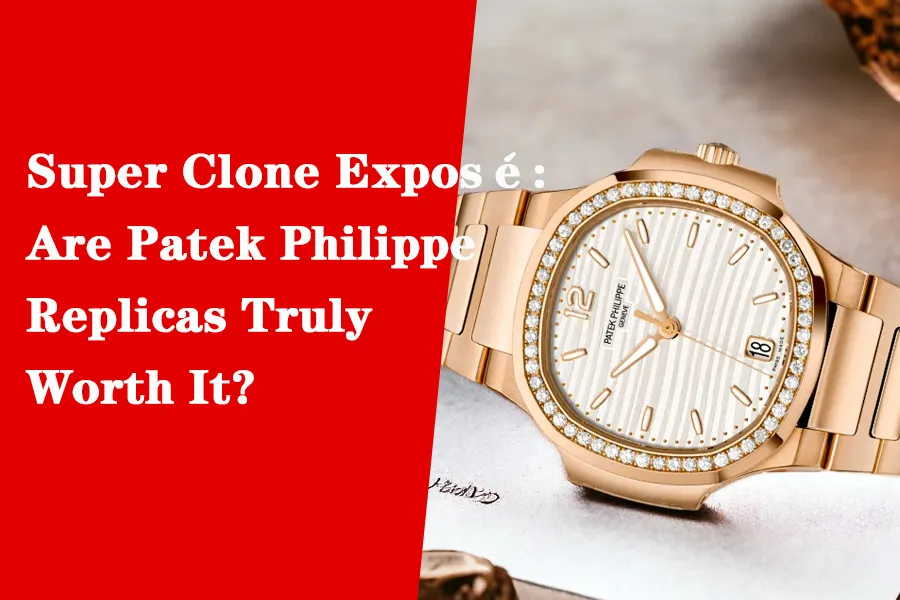
“Super clone” refers to top-tier 1:1 replica watches that aim to copy high-end luxury timepieces in every detail. These clones are designed to look almost indistinguishable from genuine models. High-quality super clones use precise dimensions, premium materials, and Swiss-like movements to mimic originals. For example, a true 1:1 super clone will match the original’s size and weight, use stainless steel or sapphire crystal, and incorporate an accurate mechanical movement. In practice, replica experts note that top-grade clones are “meticulously crafted to closely mimic the genuine article. They should feel substantial in the hand and have a precise case polishing”. In short, super clone Patek Philippe watches strive to offer luxury design and heft without the genuine price tag.
Clone Quality & Craftsmanship
Super clones strive for premium build quality. Reputable sources report that many use high-end materials – for example, some clone factories even use 904L stainless steel (the same grade used by Rolex) and scratch-resistant sapphire crystal to match the original look. Clone movements are often 1:1 copies of Swiss ETA or other reputable calibers, so the hands sweep smoothly like the real thing. In other words, a best-in-class super clone will have:
-
High-grade materials: Premium steel (316L or even 904L) and sapphire crystal in cases and bracelets.
-
Swiss-style movement: Accurate automatic or mechanical movement (often a cloned Swiss ETA or Miyota) for reliable timekeeping.
-
Perfect detailing: Laser-etched logos, precise engravings and serial numbers, and finely brushed/polished surfaces. In fact, press coverage notes that super clones often “feature 1:1 cloned movements and use premium materials such as 904L stainless steel and sapphire crystal,” making them nearly identical in weight and finish to genuine luxury watches.
-
Weight and feel: A genuine watch’s heft is hard to fake; many clones aim to match it. As one source quips, “A real Patek Philippe feels heavy and balanced,” while a poor-quality copy might feel light or uneven.
Nonetheless, even the best clones cannot perfectly match an original’s meticulous craftsmanship. For example, one analysis explicitly compares clones vs. originals and finds clones to be “generally good” in quality and a “close imitation” in craftsmanship, whereas genuine Patek Philippe watches have “consistently high quality” and “superior craftsmanship”. In practice, that means a super clone will look and feel excellent, but still may have minor finish differences under magnification .
Popular Patek Philippe Clone Models
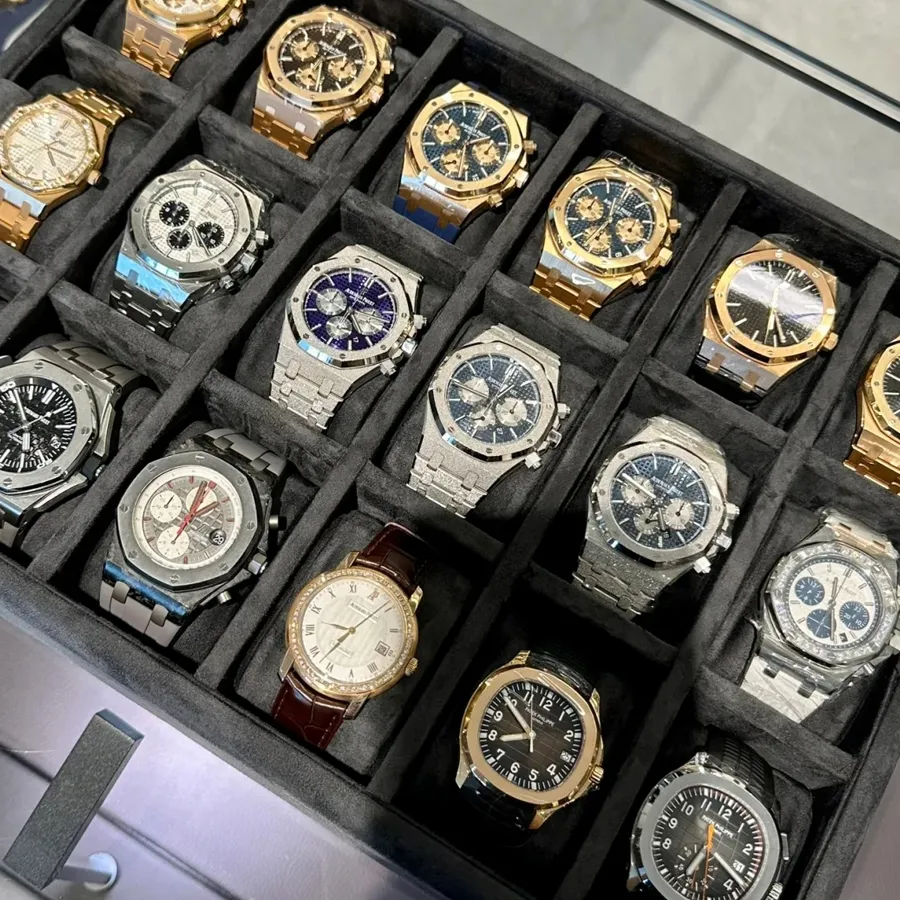
Several iconic Patek models are commonly replicated at the super clone level. Most clones focus on steel sports models, which are particularly coveted. For instance, the Nautilus and Aquanaut are among the most-imitated Pateks. Modern clone makers boast that Nautilus copies now have “perfect case curvature, blue gradient dials, and integrated bracelets that look and feel premium,” and even transparent casebacks with visible (replicated) movements. Aquanaut clones likewise capture features like the embossed dial, screw-down crown, and comfortable rubber strap. Lesser-known models are cloned too: dressy Calatrava designs and rose-gold Nautilus editions are available in replica form, though precious metal clones typically use plating (not solid gold). Even complicated pieces like dual-time Aquanaut Travel Time are targeted. In all cases, clones attempt to match the original’s aesthetics – but no clone can match the genuine movement or heritage of a real Patek.
Super Clone vs. Genuine Patek Philippe
Material & Craftsmanship: Original Patek Philippe watches are the result of countless hours of expert labor with the finest materials. They use high-grade metals and precious stones and house intricate in-house movements. A super clone imitates these looks but substitutes materials and movements. For example, a clone might use 316L steel or plated metal rather than the exact alloy of a Patek. As one replica shop notes, “original Patek Philippe watches are renowned for their meticulous craftsmanship… They use premium materials such as high-grade metals and gemstones, and feature intricate, reliable movements.” Clones may come close visually, but experts stress the original is unique in build consistency.
Finishing and Details: Genuine pieces have flawless detail – every line is precise. Clones often have tiny lapses. In fact, a side-by-side comparison shows that clones miss subtle cues. A reviewer noted “even the best fake Patek… cannot copy the delicacy of an original,” visible in differences like a wider bezel or slight thickness increase. Clones often use generic parts (quartz or lower-grade automatics), so they tend to be a few tenths of a millimeter thicker than slim Patek cases (the original 5711 Nautilus is only about 8.5 mm thin). Genuine Patek case edges are crisp and polished; clones might have softer or uneven edges. In short, clones capture the general look, but an expert can spot that the fake’s finishing is not the “superior craftsmanship” of a real Patek.
Functionality: High-end clones usually replicate basic functions (hours, minutes, date). However, complicated features (e.g. chronographs, perpetual calendars) rarely work as well or at all in clones. The movements inside clones are typically simple ETA-based calibers, so complications are often just decorative or dummy functions. Originals, in contrast, use proprietary calibers (like Caliber CH 28‑520 C FUS in a Nautilus chronograph) that are finely finished and undergo strict QA. Clone movements can be reliable for daily wear but lack the precision engineering of the genuine article.
Value & Prestige: A genuine Patek Philippe carries enormous brand prestige and investment value. Authentic Pateks often appreciate over time, whereas clones generally have no such value. One comparison notes that genuine watches are “high-cost investment” while clones remain only “good (close imitation)” buys. Indeed, original Nautilus or Aquanaut models fetch tens of thousands of dollars on the market, while super clones sell for a few hundred. Replicas do not come with official warranty or service, nor do they hold any collectible worth. In short, prestige and resale go to the original, while the clone only offers the look at lower cost
How to Spot a Super Clone
Even high-quality clones have telltale signs if you know what to look for. According to watch experts and test comparisons, key clues include subtle differences in dial, case, and detailing. For example:
-
Dial color: An authentic Patek Nautilus 5711 has a deep blue dial with a greenish tint, while many clones get the shade slightly off. In one test, a real 5711’s blue dial included a “hint of green,” whereas the clone’s dial was a flat blue lacking that green tone.
-
Bezel and case finish: The genuine Nautilus bezel is relatively narrow and finely brushed. A well-made fake often has a wider, less-refined bezel. In fact, one guide notes “the fake watch’s bezel is too wide… The authentic Patek Philippe bezel is narrower and smaller than the fake”. Any uneven brushed finish or misaligned case edge can betray a clone.
-
Crown and crown guards: Look at the crown profile. A real Nautilus crown sits slightly flush and has pronounced guards. The clone’s crown tends to stick out more and have smaller guards. As one source confirms, “the crown of the replica sticks out more” than the original, and the fake’s crown guards are often too narrow. In the image below, the genuine Nautilus (top) shows a broader crown guard, whereas the clone’s guard (bottom) is visibly smaller:
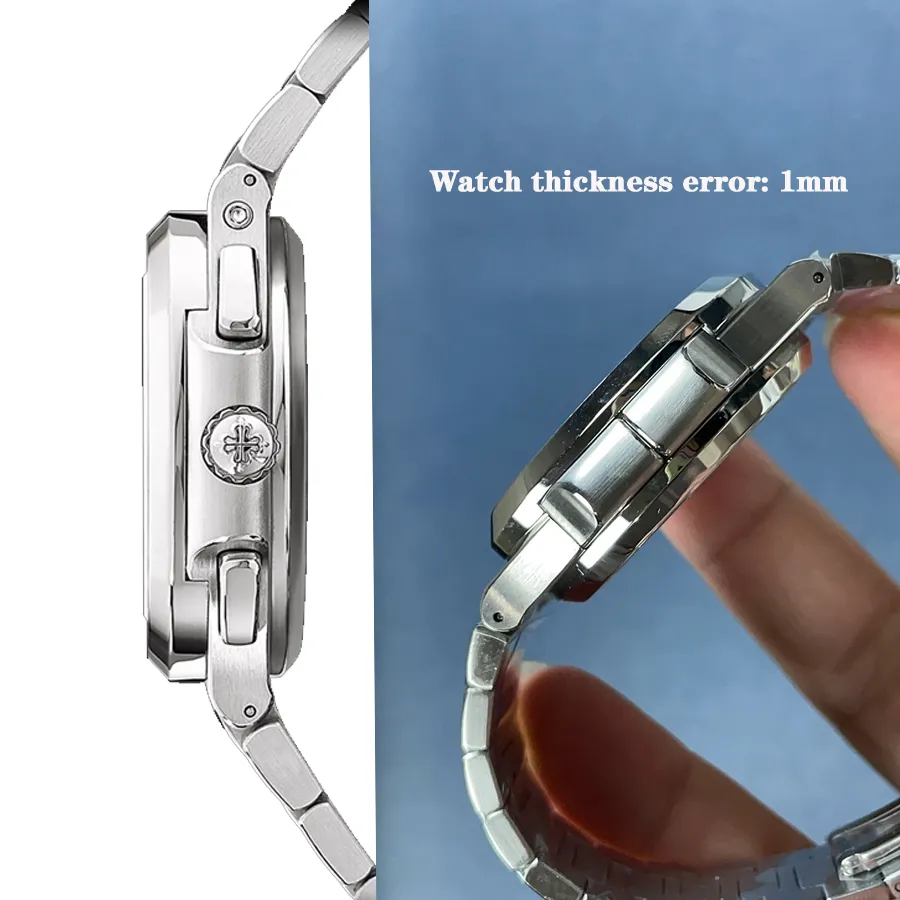
Image: Authentic (top) vs. fake (bottom) Nautilus side profile. Notice the genuine model’s wider crown guard covering most of the crown, compared to the clone’s narrower guard
-
Thickness: Genuine Nautilus cases are very thin (around 8.5–8.7 mm). Clones often use generic movements that add height. As one expert notes, “even the best fake Patek Philippe watch cannot copy the delicacy of an original, which is apparent in the thickness. The movement inside the replica is a run-of-the-mill movement that adds to the height”. In practice, comparing thickness or edge angles under light can reveal a tiny gap.
-
Magnified details: Under magnification, genuine Patek finishing is impeccable. One reviewer points out that authentic Nautilus hands and markers are “flawless creations” with no imperfections, whereas a fake shows minor flaws. Using a loupe, look for crisp edges on the hour markers and smooth, even engraving. A reliable tip: “A magnifying glass will help you glance at poorly finished details and irregularities that don’t feature in a $60,000 timepiece”.
Image: Authentic (left) vs. fake (right) Nautilus dials. The fake’s date font (“11”) is noticeably smaller and thinner than the original’s. Such misaligned or improperly sized numerals often reveal a replica.
Each clone brand and model may have its own quirks, but these general guidelines help. In summary, weight, feel, and minute finishing are your best clues: a genuine Patek will feel solid and exquisitely finished, while even a top clone may be fractionally lighter or have minor defects upon close inspection.
Pros and Cons of Super Clone Watches
Whether a super clone is “good” depends on expectations. In favor:
-
Affordability: Clones cost only a few percent of the original. You can wear the look of a Nautilus or Calatrava on your wrist for a few hundred dollars instead of tens of thousands.
-
Appearance: High-end clones often look very convincing at normal viewing distance. Many use accurate Swiss clone movements and quality materials, so casual observers may not spot the difference.
-
Functionality: Most clones tell time and date reliably, and some even have working chronographs or dual time functions.
However, there are clear drawbacks:
-
No warranty or support: Clones come with no genuine service support. If the watch fails, repairs can be difficult and costly (in fact, sending it to an official Patek service center would violate intellectual property laws).
-
Legal and ethical issues: Producing or importing these clones violates Patek Philippe’s trademarks. While simply owning a replica for personal use is generally not illegal in many countries, the counterfeit trade supports gray markets and can involve unethical practices. Experts caution that “the manufacture and sale of these replicas may infringe intellectual property rights, as well as contribute to illegal activities and organized crime networks”. Buyers must weigh this.
-
Variable quality: Not all super clones are equal. Some advertised “super clones” might still use lower-grade parts. It takes careful sourcing (and sometimes personal connections) to find the very best factories. A reputable supplier or detailed review is essential.
-
Zero investment value: Genuine Patek Philippe watches can appreciate or hold value over time. Clones almost never do. One comparison explicitly notes that genuine high-end watches are “high-cost investments,” whereas replicas remain only value-for-money tools.
In summary, a Patek super clone can be a good buy if your priority is aesthetic and style on a budget. It lets you enjoy the look of a luxury timepiece without the price. But you sacrifice authenticity, future value, and possibly legal peace of mind. As with any replica purchase, it pays to be realistic about limitations.
Expert Insight (Marco Silva)
Former Patek Philippe QC inspector Marco Silva (2008–2018) offers a cautionary perspective. Silva acknowledges that some super clones are frighteningly well-made, but he stresses that the original’s craftsmanship is unmatched. He notes that even a high-end clone will still have detectable flaws: for instance, the clone’s case may be slightly thicker and its detailing less refined. Silva advises buyers to inspect carefully: true Patek Philippe hands and markers are “flawless creations,” so any dust, uneven printing, or rough edges visible under magnification indicate a fake. He also emphasizes weight and balance – genuine models should feel substantial and perfectly balanced on the wrist.
In Silva’s view, a well-made clone might “fool even seasoned collectors at a glance,” but with close inspection it will reveal itself. He famously reminds clients: “a watch costs what it is; if it looks too good to be true for the price, it probably is.” In practice, Silva would encourage anyone considering a super clone to compare it directly to the authentic model (if possible) or to buy only from trusted sources. Our How to Choose Patek Philippe Super Clone Watches: A Definitive Guide (linked below) provides many of Silva’s recommended checkpoints for verifying clone quality.
Are Super Clones Worth It?
Ultimately, the value of a super clone is subjective. For collectors and purists, nothing replaces a genuine Patek Philippe – its engineering excellence and brand heritage are beyond replication. For casual enthusiasts, a super clone can be a cost-effective way to enjoy luxury design. They are good in the sense of aesthetic quality: a top-tier clone will clearly look the part to most observers, and may even pass basic scrutiny.
However, buyers should weigh this against the downsides outlined above. If you simply want the fashionable style of a Nautilus or Calatrava, a super clone delivers that effectively. If you care about precision mechanics, investment value, or supporting the original brand, then a clone is a poor substitute. As one replica analyst puts it, super clones offer an “accessible alternative” with “remarkable quality,” but they remain just that – an alternative, not a replacement.
For those who decide to proceed, it’s crucial to do homework. Read reviews, verify factory reputations, and check the finer points (as Silva advises). To help, we recommend the following internal resources on our site: our expert-curated list of the 2025 Best Patek Philippe Super Clone Models (which highlights the most convincing Nautilus and Aquanaut clones), our clone vs AAAA grade comparison guide, and the How to Choose and Beyond Authenticity articles linked below. These contain detailed tips on selecting the best clones and understanding their limitations.
In summary: Super clone Patek Philippe watches can be very good copies – much better than cheap knockoffs – but they remain imitations. They offer style and craftsmanship that impress at first glance, yet they lack the soul and value of a true Patek. Whether they are “good” depends on what you seek: an affordable style versus a genuine luxury timepiece.
Further Reading: For more on clone quality and selection, see our guides 2025 Best Patek Philippe Super Clone Models: Expert Analysis & Recommendations, 2025 Patek Philippe Replica: 5 Super Clone vs AAAA+ Differences, How to Choose Patek Philippe Super Clone Watches: A Definitive Guide, and Beyond authenticity: Patek Philippe replica vs original.