



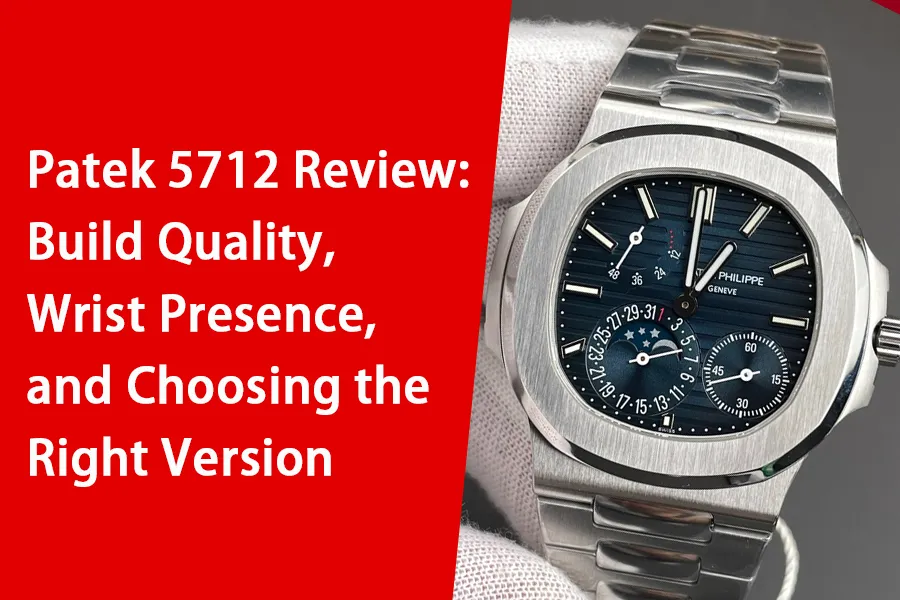
Introduction: What Is the Role of This Article?
When first exploring the Patek 5712, it is easy to fall into a state of “specification collection”: 40mm diameter, sapphire crystal, moon phase and power reserve functions… All of this information is clearly listed on a specification sheet. Yet after reading it, you are still left without an answer to the core question: When I actually have a 5712 in hand, where should I begin to evaluate its quality?
This article is not a sales page. It is not here to tell you “how much it costs” or “how to place an order.” Instead, it serves as an evaluation framework and a selection guide. Whether you are new to the realm of patek 5712 replica watches or already comparing different versions, this article will provide you with a structured set of observational logic.
Specifically, this article will accomplish three things:
-
Establish Evaluation Criteria: Break down the dimensions to observe when assessing a 5712 case—from thickness distribution and case transitions to dial clarity and functional synchronization.
-
Interpret Shared Design Traits: Understand how the qualitative characteristics that transcend individual materials or colors collectively shape the wearing experience.
-
Navigate Style Differentiation: Provide a detailed comparison between the 5712/1A blue dial steel model and the 5712/1R rose gold leather-strap model, helping you determine which version better aligns with your daily scenarios and personal preferences.
After reading this article, you can take this framework with you to the corresponding product pages to view the detailed specifications and actual photographs of specific models.
Why the 5712 Platform Attracts Different Preferences
Before diving into technical specifics, it is necessary to clarify a premise that is easily overlooked: The 5712/1A and 5712/1R should not be treated merely as different color variants of the same wearing choice. Although they share the same case proportions and movement architecture, the metal material, strap configuration, and the resulting wrist presence and visual temperament steer them toward distinctly different stylistic directions.
-
Steel Bracelet Model: Closer to the “sporty elegance” tool-watch ethos from which the Nautilus line originated. It offers higher versatility for daily wear.
-
Rose Gold Leather Model: Leans toward the refined expression of a dress watch. It carries a stronger presence, while the leather strap provides a lighter burden on the wrist.
Understanding this distinction makes the following common evaluation standards more meaningful—because regardless of which version you ultimately prefer, you need the same framework to judge whether its foundational execution is solid.
What Actually Determines the Quality of a 5712 Case?
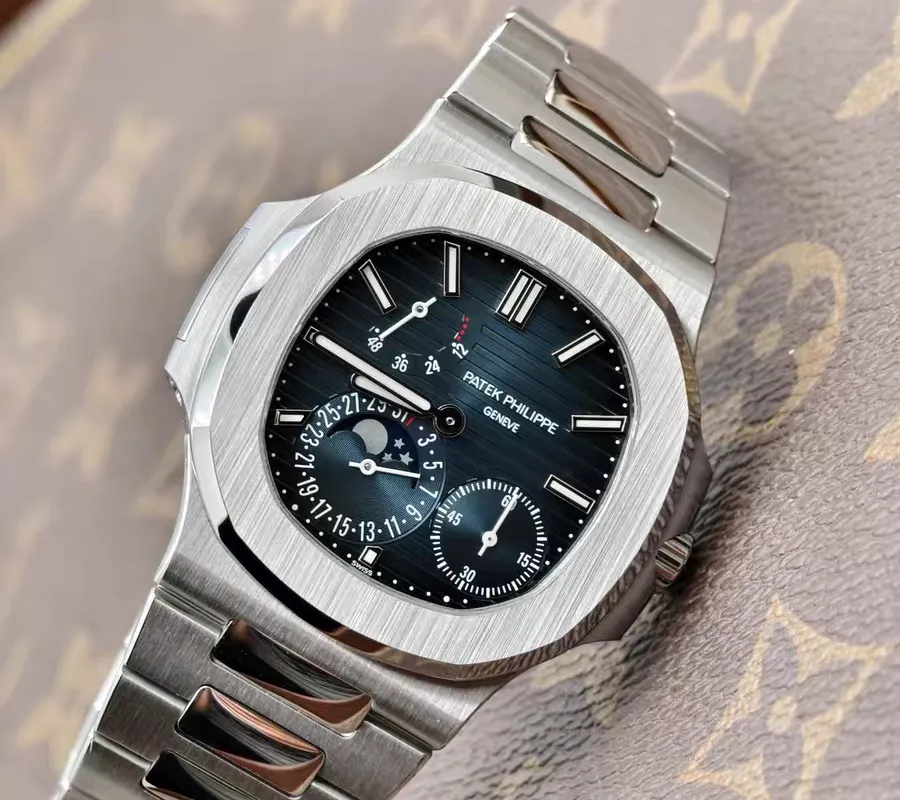
For a watch with an integrated case design like the Patek 5712, “completeness” is not defined by a single standout specification. Rather, it is determined by whether the following dimensions form a unified, harmonious experience:
-
Proportion and Balance: Is the side profile smooth? Does the weight settle comfortably on the wrist?
-
Transitions and Continuity: Is the dividing line between brushed and polished surfaces crisp? Are the layers of the bezel, mid-case, and caseback naturally aligned?
-
Clarity and Depth: Is the crystal reflection well-suppressed? Does the dial texture exhibit depth under varying light conditions?
-
Function and Logic: Do the moon phase, power reserve, and calendar operate as a cohesive system?
Each of the following sections will address specific methods of observation based on these dimensions.
Case Thickness, Side Profile, and Wrist Balance
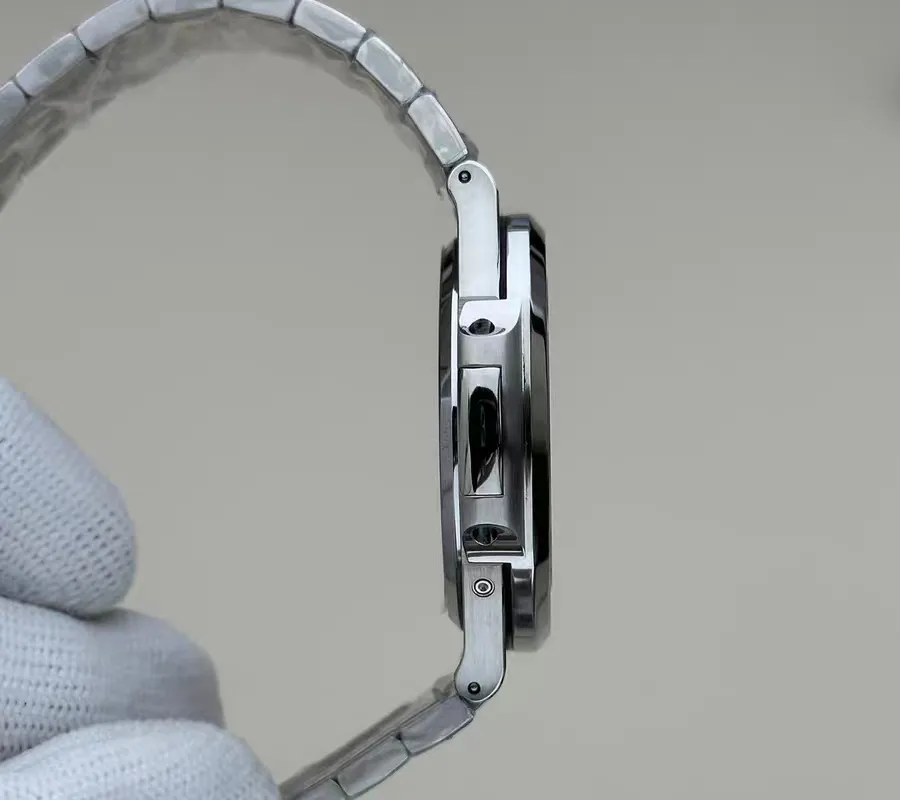
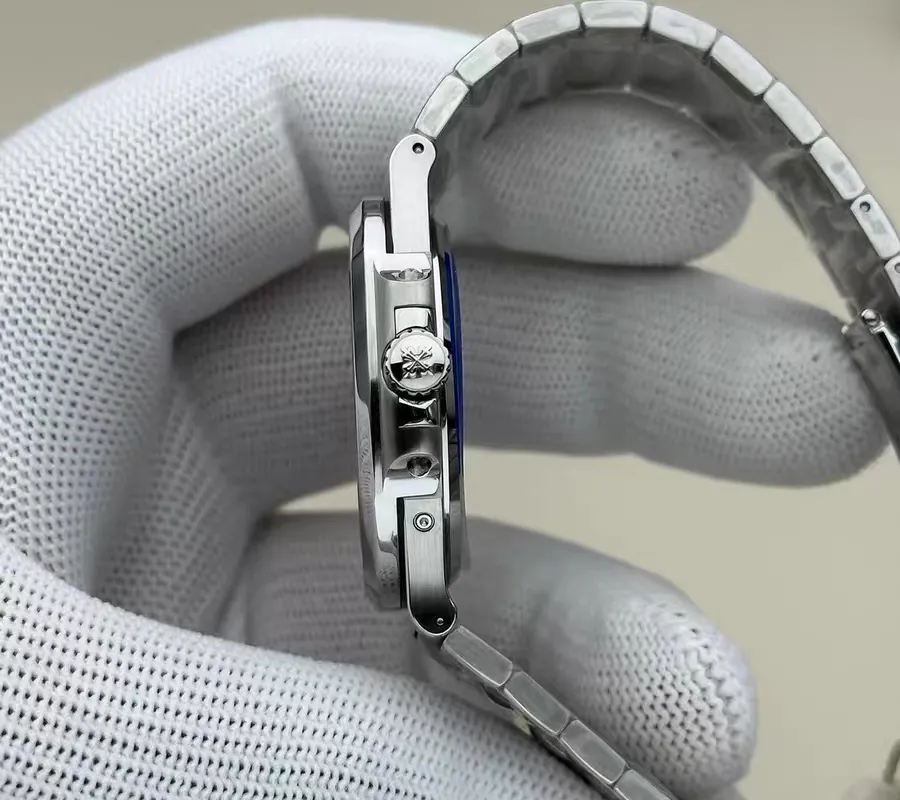
Observing the Side Profile: The Distribution of 8.3mm Matters More Than the Number Itself
In the Nautilus design language, the elegance of the integrated case heavily depends on the restraint shown in the side profile thickness. Many cases can achieve a similar frontal silhouette, but when viewed from the side, if the mid-case appears bloated or the caseback protrudes awkwardly, the overall poise of the watch is significantly diminished.
When evaluating a Patek 5712 case, the distribution of thickness should be the first priority. A total thickness of 8.3mm is a valuable reference baseline, but the more meaningful assessment lies in how these 8.3mm are allocated among the bezel, mid-case, and caseback. A well-proportioned example will display a clean, continuous curve from the lugs to the bezel without an obvious “step” effect. The mid-case area, in particular, must remain restrained and not bulge outward.
Balance and Fit on the Wrist
Beyond the static side profile, the distribution of weight on the wrist is an equally important evaluation metric. A well-balanced watch should settle naturally at the center of the wrist, neither pulling downward due to an overly heavy head nor causing discomfort from uneven weight distribution. In practice, a higher degree of execution achieves a balance of “hugging the wrist without pressing down,” ensuring the watch remains naturally fitted throughout daily activities.
Finishing Quality: Bezel, Mid-Case, and Polished Transitions
The level of case finishing determines how well the watch withstands scrutiny over long-term wear. This evaluation can be approached through three lenses: structural transitions, craft intersections, and functional details.
Observing the Bezel Porthole Design and Teeth
The porthole-shaped recesses on the bezel are one of the most distinctive features of the 5712. When evaluating, observe two key points: whether the size and spacing of the teeth are uniform, and whether the cut surfaces of the grooves are clean and even. These factors directly impact the visual tension of the bezel and the tactile feedback when rotating it. A well-executed example will exhibit symmetrical, consistent tooth distribution with smooth groove walls and a fluid, non-sloppy rotation feel.
The Intersection of Brushed and Polished Finishes
The case flanks of the Patek 5712 are typically brushed, while the front surfaces and bevels are polished. The true test of craftsmanship lies not in the finishes themselves, but in the sharpness and continuity of the transition line between them. Observe from multiple angles in natural light: Is the brushing grain consistent in direction and fine in texture? Is the polished surface clear without being blindingly reflective? Most importantly, is the boundary between the brushed and polished areas crisp, without bleeding or jagged edges? The quality of this line is often the key differentiator in finishing refinement.
Bevel Transitions and Hand Refinement
The inverted triangular bevels on the bezel edge create a fine strip of reflected light. When assessing this feature, note whether the bevel angles are symmetrical and consistent in width. Under macro observation, a smooth bevel line should transition naturally into the adjacent brushed and polished planes without harsh breaks or fractures.
The Crown Gap: A Functional Detail
When the screw-down crown is fully locked, a minute gap (approximately 0.25mm) is typically left between the base of the crown and the side of the case. This gap serves a functional purpose: it prevents the tip of the crown from rubbing directly against the case flank, thereby avoiding unnecessary wear marks over time. When evaluating, simply observe whether this gap is uniform and whether it maintains the visual integrity of the side profile while providing its protective function.
Dial Depth, Sapphire Clarity, and Hand Detail
The front of the watch is the area most frequently engaged by the wearer. For the Patek 5712, the quality of the frontal view is determined by the interplay of crystal reflection control, dial texture depth, and hand precision.
Reflection Control on Sapphire Crystal
While sapphire material is standard, the true distinction lies in the anti-reflective coating’s ability to suppress glare. Some crystals, when viewed from an angle, produce a noticeable “white haze” of reflection that obscures dial details. Evaluate from two perspectives: Head-on, is the date window and moon phase disk clear and legible? At approximately a 45-degree angle, is reflection effectively tamed, and does the sunburst dial texture remain visible? A well-executed crystal should be as “invisible” as possible in most daily lighting angles, allowing the eye to rest naturally on the dial itself.
Flow and Depth of the Sunburst Finish
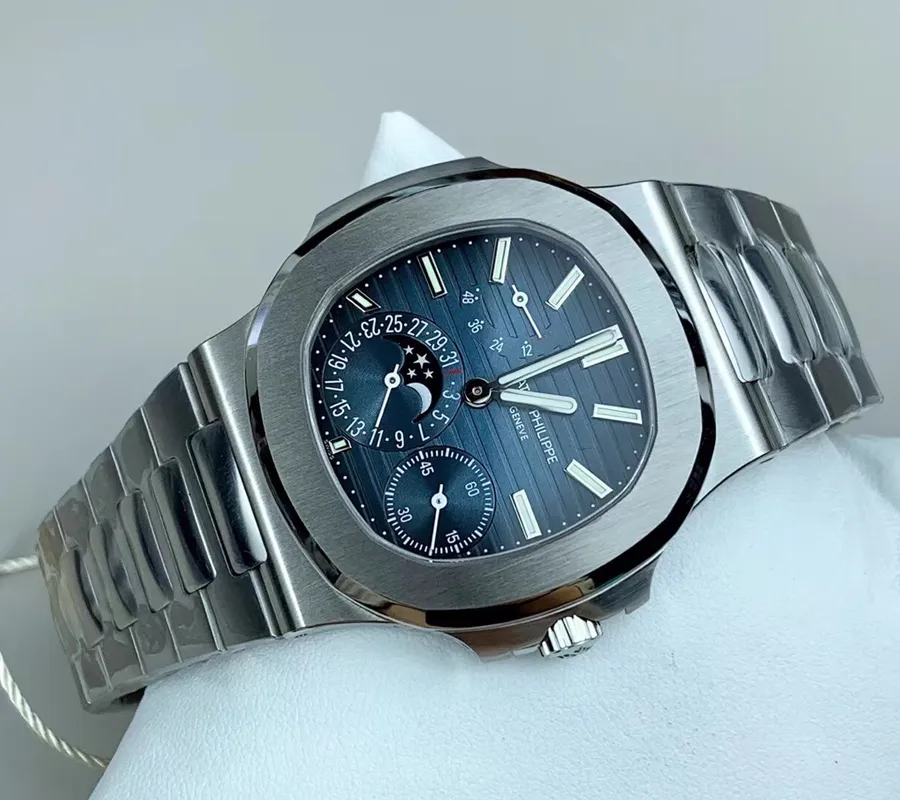
The delicacy of the sunburst radial pattern on the blue-gray dial directly influences the perception of quality. Slowly rotate the watch under a single light source and observe whether the texture forms a smooth band of light radiating outward from the center. Refined texture transition should be fluid and continuous, free of breaks or uneven patches of color. This sense of depth and layered movement is an implicit factor that enhances every glance at the time.
Date Magnifier and Coating Consistency
The magnification factor and coating hue of the cyclops lens over the date window should be visually consistent with the main crystal. Check that the date numeral is centered, full-bodied, and crisp at the edges, and that the edges of the magnifier do not introduce chromatic dispersion or distortion that hinders legibility.
Blued Hands and Luminous Filling
The execution of the handset is often more objectively judged under macro scrutiny. Look for: A flat, wave-free surface on the blued hands; a rounded, burr-free finish at the tip of the hands; and even, full application of luminous material without overflow onto the edges of the markers. The brightness and duration of the glow in low-light conditions also serve as a reference for the overall refinement of the hand system.
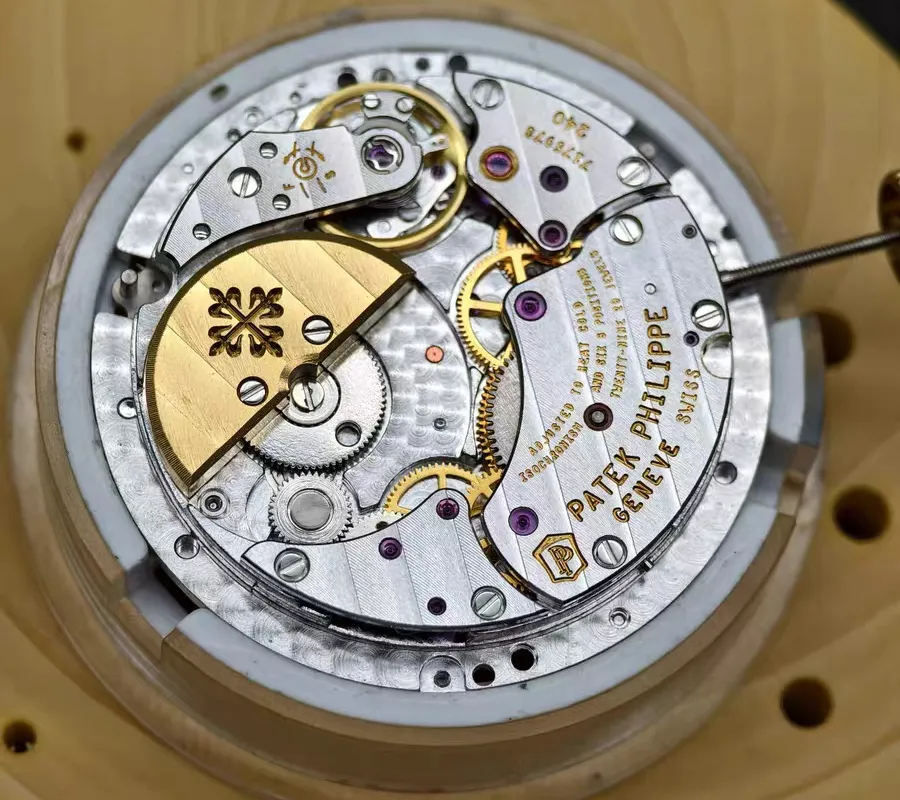
324SC Functionality and Daily Usability
Evaluation of the movement should extend beyond “what functions are present” to encompass the synergy between those functions. This is a crucial entry point for understanding the experiential differences among various Patek 5712 cases.
Functional Synchronization: The Logic of a Unified System
The watch utilizes an integrated 324SC movement, encompassing moon phase, power reserve indication, and calendar functions. A key observation point is functional synchronization: When adjusting the time or date via the crown, do the moon phase and power reserve indicators advance in tandem, or do they operate independently and require separate correction? The restoration of this synergistic logic translates into a more natural, fluid user experience—the movement functions as a unified system rather than a simple aggregation of unrelated modules.
The Practical Significance of 48-Hour Power Reserve
A 48-hour power reserve may not stand out on a specification sheet, but it holds tangible value in actual wear: Removing the watch on Friday evening and picking it up again on Monday morning should ideally require no resetting or winding. For those who rotate multiple watches, this “weekend buffer” significantly reduces the frequency of adjustments, contributing to a more seamless daily routine.
Choosing Your Version: 5712/1A vs 5712/1R
Having grasped the common evaluation criteria for the 5712 platform, the next step is a more personal decision: Which is better suited for you—the blue dial steel model or the rose gold leather model?
These two versions share the same case proportions, movement structure, and core detailing, but they diverge clearly in visual temperament, wrist feel, and situational appropriateness. The following comparison will aid in making a clearer determination.
5712/1A-001 Blue Dial Steel: The Everyday Expression of a Classic Silhouette
Stainless steel construction paired with an integrated metal bracelet represents the most iconic presentation of the Nautilus line. The blue sunburst dial, set against the cool tones of the steel case, conveys a composed and rational aesthetic.
-
Visual Presence: Understated, classic, possessing a sporty elegance.
-
Wrist Feel: The metal bracelet provides even weight distribution. It sits with a solid, secure presence on the wrist.
-
Scenarios: Suitable for daily commuting and business casual environments. A versatile choice with broad compatibility.
-
Ideal For: Wearers who appreciate the classic Nautilus visual identity and want a watch that integrates seamlessly into daily attire. If you intend for this to be a primary, long-term wear piece, the steel blue dial is a sound direction.
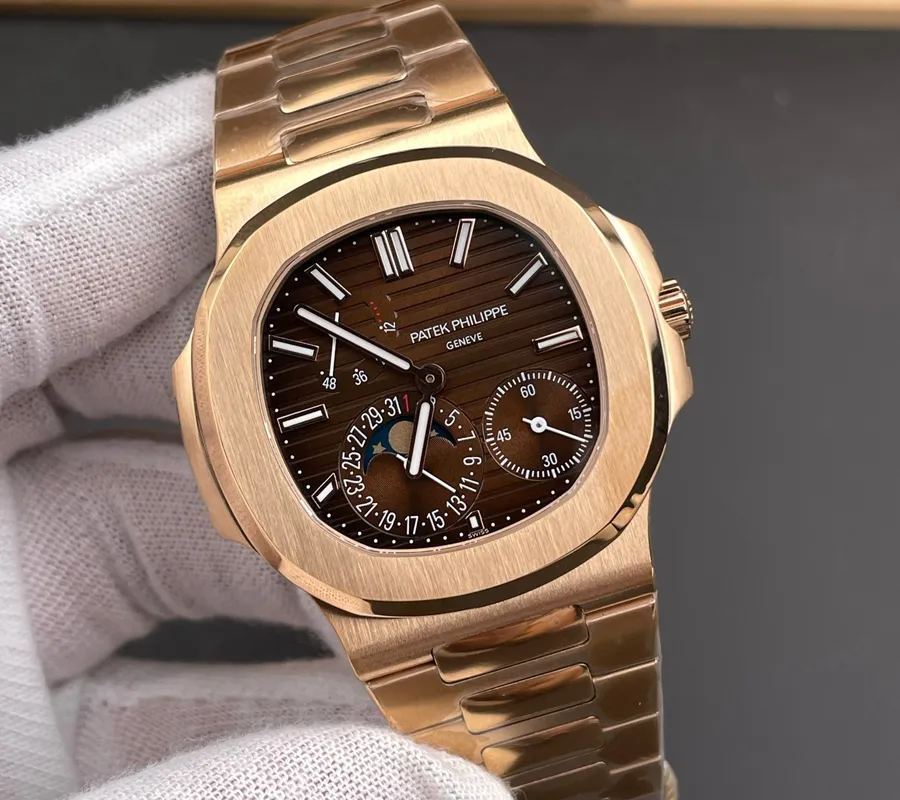
5712/1R-001 Rose Gold Leather: Elevated Warmth and Style
The rose gold case introduces a warmer, more prominent precious metal luster to the 5712. When paired with a leather strap, the overall weight of the watch is reduced, and its presence beneath a cuff shifts from “solid adherence” to “lightweight refinement.”
-
Visual Presence: Warm, formal, with an understated sense of luxury.
-
Wrist Feel: The leather strap is lighter and exerts less pressure on the wrist, particularly suited for those who prefer a lighter feel or have slender wrists.
-
Scenarios: Well-suited for formal occasions, evening events, or settings where the watch should express a degree of style without being ostentatious.
-
Ideal For: Wearers who admire the warm luster of rose gold, prefer the comfort of a leather strap, and seek a watch that reflects personal taste in its details. If the stylistic value of the watch in specific social contexts is a priority, the rose gold version merits strong consideration.
Quick Comparison: Core Distinctions Between 1A and 1R
| Evaluation Dimension | 5712/1A Blue Dial Steel | 5712/1R Rose Gold Leather |
|---|---|---|
| Daily Versatility | High; suitable for most non-formal settings | Moderate; leans toward formal and semi-formal |
| Visual Presence | Classic and understated; blends easily | Warm and prominent; distinct precious metal glow |
| Wrist Weight Feel | Solid; distinct sense of heft | Lightweight; minimal burden on the wrist |
| Stylistic Tendency | Tool-like sport elegance | Jewelry-like refined dress presence |
| Strap Experience | Integrated bracelet; strong visual cohesion | Leather strap; enhanced comfort and breathability |
If the decision remains difficult after this comparison, a useful thought exercise is: Envision the three most frequent scenarios where this watch will appear in your life over the next few months. If the answer points more toward the office, weekend outings, and casual socializing, the 1A is likely the more universal choice. If the answer includes evening dinners, important meetings, or formal events requiring refined details, the 1R may provide stylistic value more aligned with your expectations.
Frequently Asked Questions: Evaluating the 5712 Platform
Before navigating to a specific product page, the following four questions can help further focus your assessment criteria.
What matters most when evaluating a 5712 case profile?
The smoothness of the side profile is significantly more important than the thickness number alone. Observing whether the mid-case bulges and whether the transition from bezel to caseback is natural is the first checkpoint for assessing case completeness.
Is case thickness more important than total weight?
The two are related but distinct. Thickness influences visual elegance and cuff compatibility, while weight and balance dictate wearing comfort. A well-executed 5712 should achieve a centered weight distribution that “hugs without pressing” within the context of its approximate 8.3mm profile.
How does a steel bracelet version wear differently from a leather-strap version?
The steel bracelet provides an even, secure fit with a stronger on-wrist presence, ideal for all-day wear. The leather strap version is lighter, with less wrist burden, and slides more effortlessly under formal cuffs. The difference in wearing experience alone can significantly influence whether a watch feels “right” for you.
What should I compare before moving to a product page?
It is advisable to clarify two points first: The ratio of your daily wearing scenarios (commute/casual/formal), and your preference regarding watch weight and fit. Entering a product page with answers to these two questions will allow you to judge much faster whether the 1A or 1R version better suits your actual needs.
Final Thoughts: Which 5712 Direction Makes More Sense for You?
Looking back, this article has not attempted to replace the role of a product page. It has deliberately avoided listing the 40mm diameter or repeating the specific hour count of the power reserve—details you can obtain more directly from the product listings.
The core purpose of this article is to provide you with an observational framework for evaluating the execution of the Patek 5712, and to clarify the core distinctions in stylistic direction and wearing scenarios between the 1A and 1R models.
If you are already clear about your wearing scenarios and stylistic preferences, you can proceed directly to the corresponding product page via the links below to view more detailed configuration photographs and specific delivery information. If you are still in the evaluation phase, feel free to return to the observational dimensions of “case proportion,” “case transitions,” and “dial clarity,” using them as internal reference points for determining whether a 5712 is worthy of daily companionship.
Explore Specific Models: